- Home
- TV
- Fantasy
- Avatar: Seven Havens delivers a stark warning about our future – and everyone should take note
❚ We may earn commission from links on this page. Our editorial is always independent (learn more).
Avatar: Seven Havens delivers a stark warning about our future – and everyone should take note
The Avatar franchise, created by Michael Dante DiMartino and Bryan Konietzko, emphasises environmental stewardship at the very core of its premise.
- David Opie
Published: Saturday, 28 November 2026 at 8:00 am
Subscribe to Radio Times: 10 weeks for £10, including the Christmas double issue
From the very first moment Avatar: The Last Airbender soared onto our screens, the long-standing series immediately established the importance of balance.
Ad
It's there in the show's now infamous opening monologue, where we learn that harmony between the four nations of Water, Earth, Fire and Air was destroyed "when the Fire Nation attacked". And it's a message that every episode of all three seasons sought to remind us of, repeating this mantra again and again in the opening credits as we followed Aang, the titular Airbender, on his quest to restore balance and save the world.
The still-popular show, created by Michael Dante DiMartino and Bryan Konietzko, emphasises environmental stewardship at the very core of its premise. Key to this is how our ability to manipulate or "bend" elemental forces must be handled with the utmost care and respect. Abuse of such power threatens not just the human world, but nature and the underlying spirit world that binds everything together.
Such concerns are obviously relevant to the world in which we live as well, hammered home further in moments where Aang acts as intermediate between humans and spirits, paving the way for mutual cooperation over mutual destruction. Crucially, these concerns are not just tacked on either. The environmental messages that underpin Avatar: The Last Airbender are fundamental to its story, acting as a call to action for viewers without describing it as such.
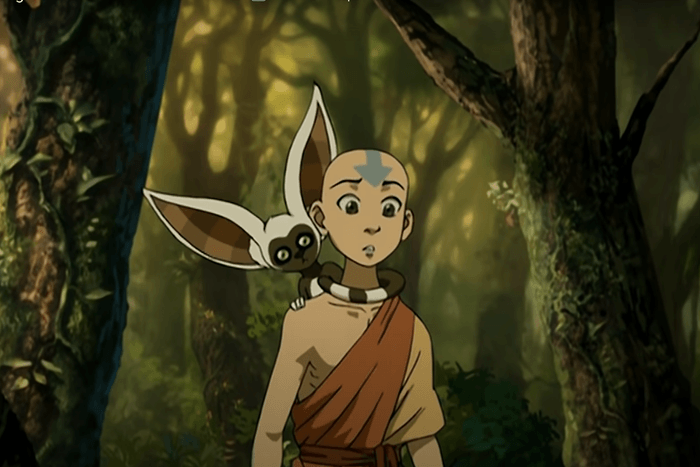
Aang in Avatar: The Last Airbender. Nickelodeon
The show is quite literally worlds away from younger fare such as Octonauts or Sesame Street, where the educational impact and value of the message they share is delivered up front. This kind of didactic messaging is vital, especially for younger viewers who need that spelled out for them, but there's something to be said for environmentally-minded storytelling such as Avatar: The Last Airbender where climate concerns are organically woven in.
It should come as no surprise though given how ingrained the influence of anime is in this franchise. Japanese animation has long incorporated themes of this nature, channeling traditional Taoist and Shintoist beliefs that prioritise ecological harmony and respect for the natural world. From '60s fare such as Kimba the White Lion right up to Pokémon and pretty much everything developed by Studio Ghibli, a lot of anime strives to inspire the kind of change that's needed on a global scale, so it's only natural that shows in the Avatar franchise would follow suit.
By the end of Last Airbender, Aang finally brings harmony to his world, but peace doesn't last. The fight must continue because there are no easy answers to problems of this size, and the evolution of that is clear in the direction this franchise took next. While the first show honed in on struggles to find harmony with nature, follow-up series The Legend of Korra progressed this further with industrialisation where a reliance on machinery and the pollution it creates threw everything even further out of whack.
Failing to find a middle ground between the natural world and modernity, it was only natural that the next series, this year's Seven Havens, would reveal the brutal consequences of that in its post-apocalyptic setting.
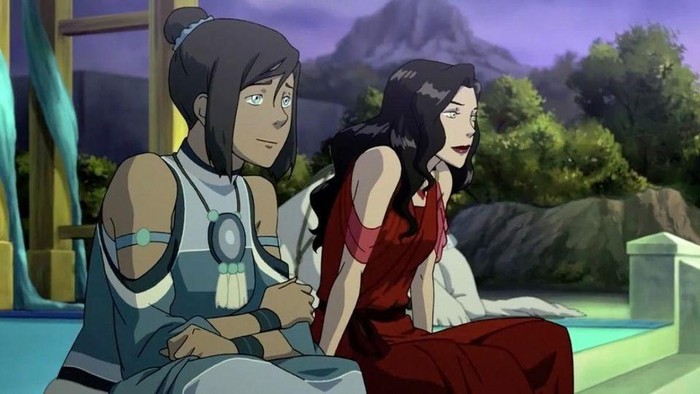
The Legend of Korra. Nickelodeon
Created by DiMartino and Bryan Konietzko, the latest Avatar show is set in a world where environmental warnings have gone unheeded, presenting a future that we ourselves are perilously close to making a reality. It's too late for poor Pavi, a new Avatar who struggles to survive in a brutal landscape ravaged by vicious sandstorms and tornadoes. The damage caused by this world's rapid technological growth seems irreversible, forcing these characters to do all they can just to survive.
While selfish humans and their hubris continue to drive the narrative, it's the collapsed ecosystem itself that poses a bigger threat now. See the tornado in the premiere or the raging green storm that threatens Ellora in episode 2. Through this dystopian world, Seven Havens forces the characters and us alike to examine the consequences of past decisions and the role humanity played in creating such anomalies in the first place.
That this message comes in the package of a kid-friendly show makes it all the more effective, regardless of how old you might be while watching. Co-creator Konietzko stresses, however, that climate change comparisons weren't initially on their mind while devising the show.
"It wasn't like a ripped out of the headlines, let's do this," he told Polygon. "We actually had this kind of post-apocalyptic idea right after the original series, so the seeds of this series were from 2008. But obviously, you know, climate change was already in discussion even back then, but early, early days."
“So while it was not the kind of creative impetus, those parallels are impossible to ignore," added Konietzko. "It's hard to do something like that without it reflecting what's going on in our world… You can't take society and civilisation for granted, and you can't take your environment for granted. Choices that humanity makes could have a really irreversible impact on your world. We all need to be thinking about those things and talking about them and acting on them."
He's not wrong. According to Climate.gov, 2025 was the third-warmest year since global records began in 1850, and the heat recorded in our oceans was at an all-time high. The 10 warmest years on record took place within the past decade, resulting in more floods and heatwaves that continue to occur at an alarming rate as the climate crisis escalates. Western takes on this issue remain few and far between though in TV, especially when it comes to children's fare where they could make the most impact.
Part of this stems from laziness or the idea that none of us can really make a difference at this point. Disagreements on how to combat climate change or whether it's even a problem at all play a part here as well, just as political disagreements divide the people of Ellora who should be coming together instead of fighting each other. In the world of Seven Havens, most citizens have found a scapegoat in Korra, blaming her for the Cataclysm that destroyed their world. But by doing so, it's clear that they're refusing to take accountability for their own actions, their collective contribution to environmental collapse at large.
In 2005, Avatar: The Last Airbender proved that animated TV could succeed with mature themes that explored the impact of war, imperialism and even genocide. Seven years later, The Legend of Korra doubled down on this while introducing LGBTQ+ themes well ahead of their time. And yet through it all, environmental concerns underpinned everything in this world at large, a fundamental message that Seven Havens brings to the fore now that such issues are more pressing than ever.
What makes it all so effective is how organic such storytelling feels to the world of Avatar. Go too subtle and the message is lost, but hammer every point home and you'll put people off. Instead, shows like Korra and Seven Havens have naturally evolved in this direction without such issues ever feeling shoehorned in for the sake of it. The foundation of these shows, their philosophy at the most basic level, is about harmony with nature, which is what makes all three Avatar stories such poignant calls to action.
As Katara first hinted at all those years ago in the very first episode of The Last Airbender, it's all a question of balance.
Avatar: Seven Havens is streaming now on Paramount+.
Ad
Check out more of our Fantasy coverage or visit our TV Guide and Streaming Guide to find out what's on. For more TV recommendations and reviews, listen to The Radio Times Podcast.
Authors
David OpieFreelance Writer
David Opie is a freelance entertainment journalist who writes about TV and film across a range of sites including Radio Times, Indiewire, Empire, Yahoo, Paste, and more. He's spoken on numerous LGBTQ+ panels to discuss queer representation and strives to champion LGBTQ+ storytelling as much as possible. Other passions include comics, animation, and horror, which is why David longs to see a Buffy-themed Rusical on RuPaul's Drag Race. He previously worked at Digital Spy as a Deputy TV Editor and has a degree in Psychology.
Ad
Ad

Last chance for the Christmas issue
The window to get the Radio Times Christmas double issue closes on 3 December. Skip the festive scroll and plan your viewing.
Loading...
Ad
Loading...