- Home
- TV
- Documentaries
- Robert Macfarlane reveals why our beloved dawn chorus is falling silent
❚ We may earn commission from links on this page. Our editorial is always independent (learn more).
Robert Macfarlane reveals why our beloved dawn chorus is falling silent
The UK has lost 73 million wild birds in the past 50 years - we should be furious, says Robert Macfarlane
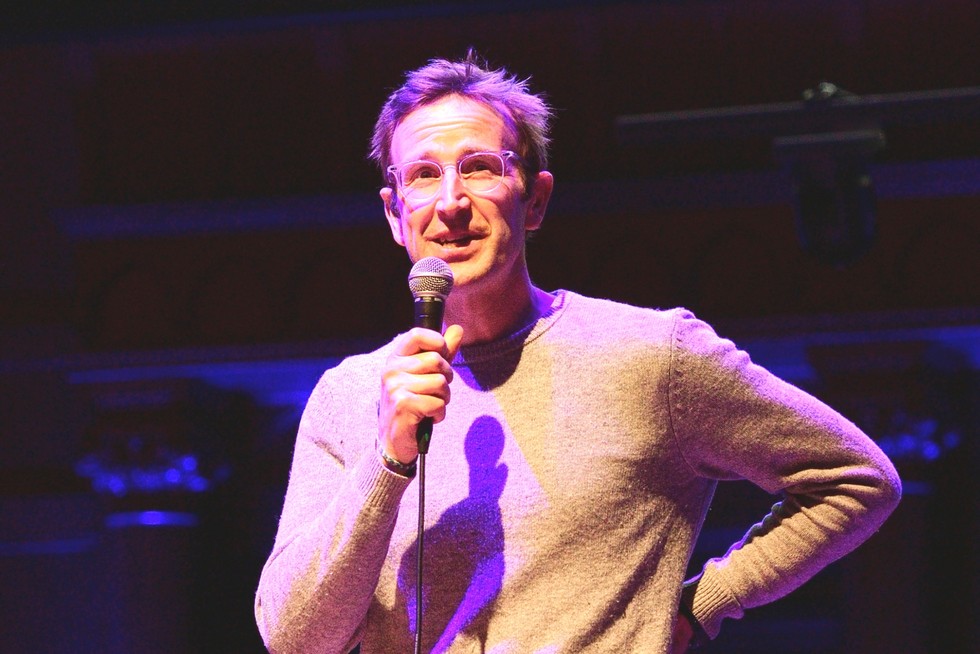
Gus Stewart/Redferns
- Robert Macfarlane
Published: Tuesday, 24 November 2026 at 1:50 pm
Subscribe to Radio Times: 10 weeks for £10, including the Christmas double issue

This article first appeared in Radio Times magazine.
Ad
I recently listened to a shocking piece of audio footage. It was a minute-long recording of the dawn chorus, made at the height of spring in 1964. The birdsong was bewilderingly, beautifully, devastatingly loud. This opulent tapestry of sound was woven by scores of singers – dunnocks, song thrushes, robins, raucous rooks and melodious blackbirds – with the quicksilver needlework of wren-song stitching it all together. It was like nothing I’d ever heard before.
Today’s dawn choruses are, by comparison, threadbare and hushed. The UK song thrush population has declined by almost 50 per cent since the late 1960s. Dunnocks are down by around 43 per cent in the same period. In the past 50 years, the UK has lost more than 73 million wild birds. That is an absolute number: the skies are emptier by that many birds, the springs and dawns commensurately quieter. Skylarks, nightingales, turtle doves, cuckoos – all are fading away.
We should be appalled by this. Just imagine the outcry if human music suddenly started to become inaccessible on popular streaming services. The blanking out of artists, the disappearance of playlists... We would be furious. Yet somehow the silencing of birds goes largely unprotested.

Red breasted robin Sandra Standbridge/Getty Images
This is among the inconsistencies I explore in my BBC Reith Lectures that take as their theme what I call “The Human Superiority Complex”. Across four lectures, I examine one of the most consequential stories humans tell about themselves: that our species stands above and apart from the rest of the living world.
I trace the rise and consolidation of the idea of human exceptionalism, and argue that it has helped bring us to the brink of planetary catastrophe. But I also show how, right now, scientists, artists, activists, lawyers and many others are contesting the story of human superiority to realise a just and viable future on Earth.
Each of my lectures is named after one of the elements. In the second, “Air”, I focus on how and why birds are slipping from our landscapes and minds. One reason for our indifference is the powerful psychological effect known as Shifting Baseline Syndrome. This is the phenomenon whereby each new generation accepts the degraded state of the living world as “normal”, such that any loss is measured against an already depleted benchmark. If you’d never heard that earlier richness of the dawn chorus in 1964, you wouldn’t recognise today’s birdsong as desperately thinner.
Want to see this content?
This page contains content provided by Google reCAPTCHA. We ask for your permission before anything is loaded, as Google reCAPTCHA may use cookies and other technologies. To view this content, choose 'Accept and continue' to allow Google reCAPTCHA and its required purposes.
Accept and continue
The ghosts of gone things fade fast from memory. We forget how a river once flowed clear, how a whole sky used to wheel with lapwings in flight. The cycle is a vicious one: we rarely name what we cannot see, we rarely love what we cannot name and we rarely save what we do not love.
Of course, it’s also possible to reverse this process: to run the reel backwards such that each new generation is born into a greater natural abundance. Let’s call this “Lifting Baseline Syndrome”. We must aspire to this, rather than settling passively for its opposite. The return of the red kite, the osprey and the white-tailed eagle to these islands show us what can be done with imagination and collective action.
I want my Reith Lectures to challenge presumptions and systems, to spark debates and to open hearts and minds. I also want them to speak across the political spectrum, because it seems to me that to wish for human prosperity in a flourishing web of life is not an ideology.
While I do not flinch from naming the crises we face, I really want listeners to feel hopeful. Despair is a luxury, to my mind, and hope is a discipline. By which I mean that hope requires first the imagining of a different, better world – and then the hard work involved in realising that vision. I hope for a future in which the springtime dawn chorus is deafeningly, gloriously loud once more.
The latest issue of Radio Times is out on Tuesday – subscribe here.

Robert Macfarlane’s Reith Lectures are broadcast weekly on Radio 4 on Tuesdays at 9am and are available on BBC Sounds.
Ad
Check out more of our Documentaries coverage or visit our TV Guide and Streaming Guide to find out what's on. For more TV recommendations and reviews, listen to The Radio Times Podcast.
Authors
Robert Macfarlane
Ad
Ad

Last chance for the Christmas issue
The window to get the Radio Times Christmas double issue closes on 3 December. Skip the festive scroll and plan your viewing.
Loading...
Ad
Loading...